Google Faces Worst Stock Drop Since 2004 Amid Ad Revenue Concerns
Google's parent company Alphabet saw its stock price drop 13% after a disappointing Q3 earnings call, and a study raises concerns about ad tech companies misusing extended identifiers. The drop is largely due to softness in Google's search ads business.
Original reporting · adexchanger.com
Original: “‘E’ For ‘Exactly The Same As Always’; Google’s Very Bad Day On Wall Street”
Read “‘E’ For ‘Exactly The Same As Always’; Google’s Very Bad Day On Wall Street” at AdExchanger →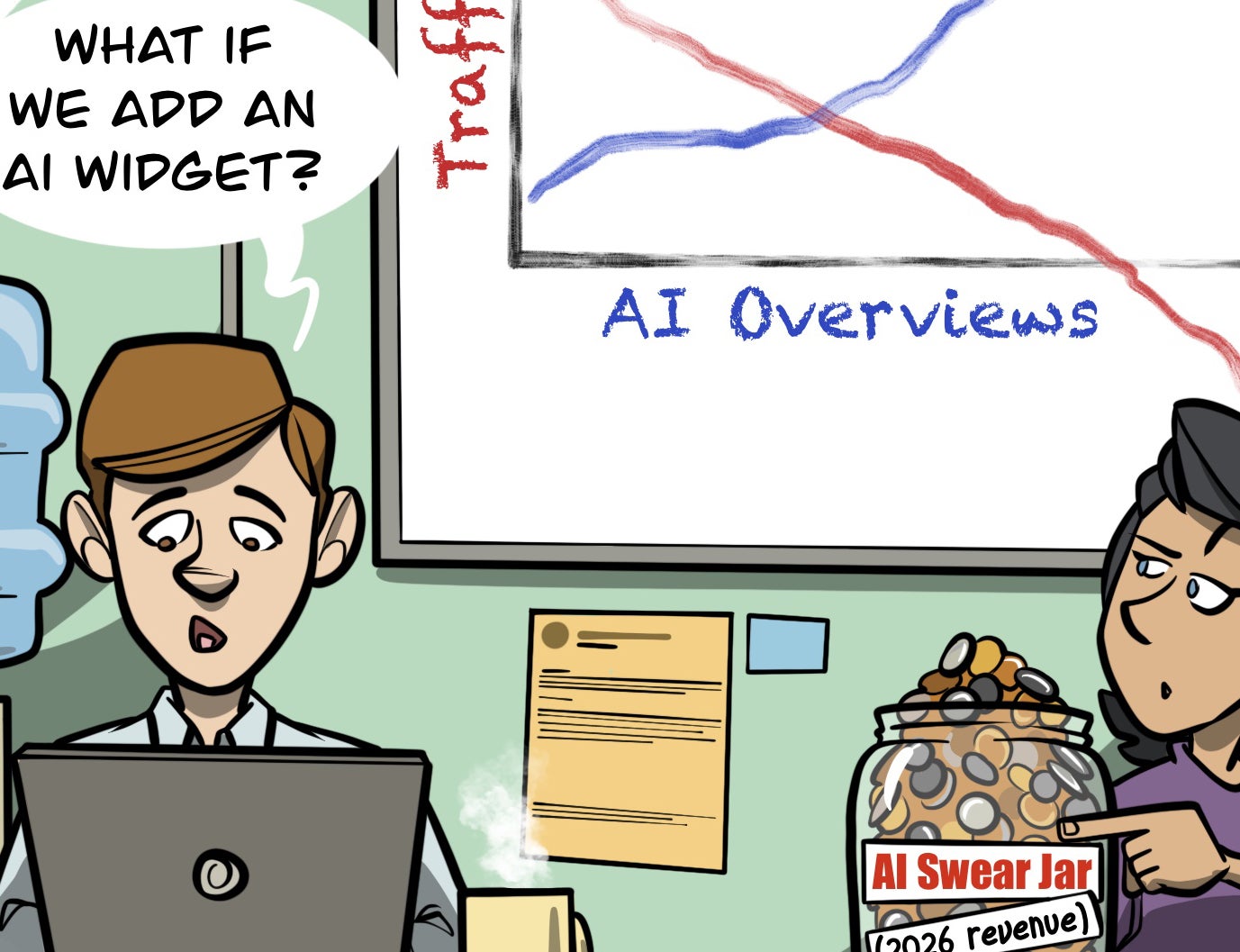
How this was written. Awesome B2B wrote this article with a language model from AdExchanger’s reporting (model: @cf/meta/llama-3.3-70b-instruct-fp8-fast); it describes that reporting rather than adding to it. The original, linked above, is the full story.
Key points from AdExchanger’s report
- Google's parent company Alphabet experienced a 13% drop in share price after its Q3 earnings call due to softness in search ads business.
- A study found that ad tech companies are misusing extended identifiers in programmatic advertising, attaching real human tracking data to automated internet bots.
- TelevisaUnivision reported a 14% drop in US revenue during the third quarter, but its LATAM World Cup coverage helped offset these losses.
- Google is betting that its investment in AI search will pay off in the long term, despite the current drag on search revenue.
- The media landscape is increasingly competitive, with sports coverage playing a crucial role in driving revenue.
A recent academic study has raised serious concerns about the misuse of extended identifiers (EIDs) in programmatic advertising, according to AdExchanger. The study found that ad tech companies were attaching real human tracking data to automated internet bots, making it appear as though real people were visiting certain sites. This practice does not qualify as sophisticated invalid traffic under the Media Rating Council's standards.
The study, co-authored by researchers at Indiana University and New Jersey Institute of Technology, identified several ad tech companies engaging in this behavior, including Zeta Global's LiveIntent, Criteo, ID5, and Experian's Audigent. However, Flashtalking was noted for its clean record, as it was the only one out of 18 ad tech vendors that was never documented serving human EIDs to bots.
Meanwhile, Google's parent company Alphabet experienced its worst stock drop since 2004, with a 13% decline in share price after its Q3 earnings call. The drop was largely due to softness in Google's search ads business, which has seen gradual slowing of revenue growth throughout the year. During the earnings call, Google's chief business officer Philipp Schindler confirmed that the strong growth in AI Mode queries had an impact on monetization.
The slowdown in search revenue growth has spooked investors, who are concerned about the impact of AI on Google's core business. As David Wagner at Aptus Capital Advisors noted, investors need to see search revenue accelerating, not decelerating, especially in a market worried about AI chatbots cannibalizing Google's key franchise.
In other news, TelevisaUnivision reported a 14% drop in US revenue during the third quarter, with US advertising revenue declining 24%. However, the company's LATAM World Cup coverage helped offset these losses, with a 30% increase in overall subscription and licensing revenue. The company plans to continue growing its audience reach across linear and streaming platforms, including expanding its sports portfolio.
Google is betting that its investment in AI search will pay off in the long term, despite the current drag on search revenue. The company plans to load up AI search with ads, which it hopes will drive greater growth in the future. However, for now, investors remain concerned about the impact of AI on Google's core business.
The media landscape is increasingly competitive, with sports coverage playing a crucial role in driving revenue. TelevisaUnivision's experience is a testament to the importance of sports in attracting viewers and advertisers. As the company looks to expand its sports portfolio, it will be interesting to see how this strategy plays out in the coming quarters.
Questions and answers
What is the main concern with extended identifiers in programmatic advertising?
The main concern is that ad tech companies are attaching real human tracking data to automated internet bots, making it appear as though real people are visiting certain sites.
Why did Google's parent company Alphabet experience a drop in share price?
The drop was largely due to softness in Google's search ads business, which has seen gradual slowing of revenue growth throughout the year.
How did TelevisaUnivision's LATAM World Cup coverage impact its revenue?
The company's LATAM World Cup coverage helped offset losses in US revenue, with a 30% increase in overall subscription and licensing revenue.